
How Often Should You Mow Your Lawn in St. Louis? A Season-by-Season Guide
The internet says once a week. Your neighbor does it every five days. The guy at the hardware store mows twice a month and swears his lawn looks fine. So what's actually right for a Missouri lawn?
The problem is that grass doesn't actually grow at the same rate all year. Mowing the same way in April as you do in July is a fast way to damage your lawn. Here's what actually works for the turf, soil, and weather that Chesterfield and St. Louis County deal with.
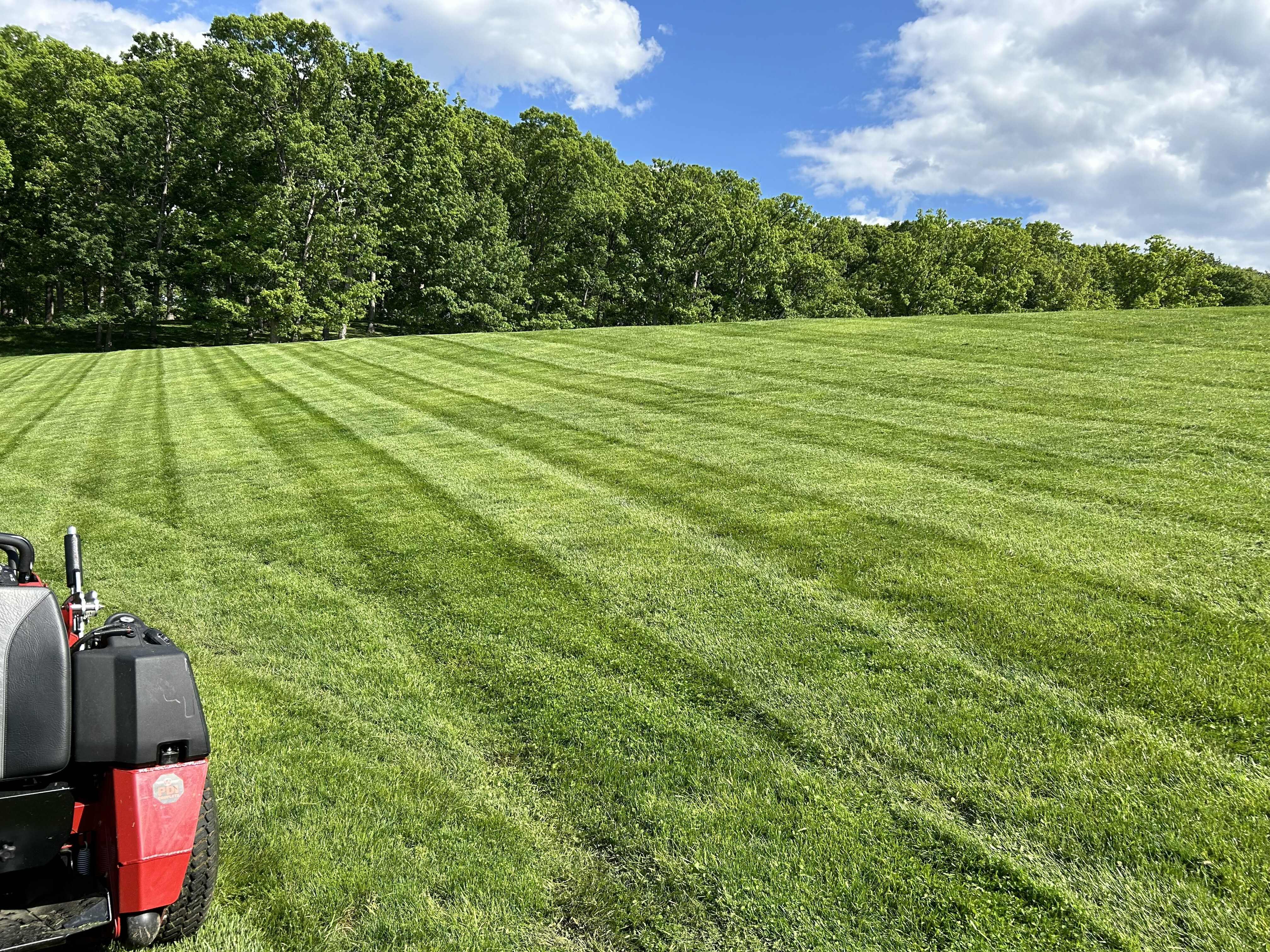
The One Rule That Matters
Forget about mowing on a schedule. The only rule that actually protects your lawn is to never cut more than one-third of the grass blade in a single mow.
When you mow too short, the tissue that feeds the plant gets removed. This stunts root growth, creating weaker plants that won't hold up against summer heat. And when the turf thins out, weeds like crabgrass start to fill in the gaps. An aggressive scalping could mean you're waiting until fall to fix with an over-seeding.
So how often do you mow? Whenever the grass has grown enough that mowing will only remove a third or less of the plant. In a wet Missouri spring, that might be every five days. In a August it could be every two weeks. Or not at all. The point is, we want to mow based on how quickly the grass is growing.
What Height Should You Mow At
Most lawns in the area are cool-season grasses like Fescue, Kentucky bluegrass or a blend of both. The University of Missouri recommends these heights:
Tall fescue: 3.0 to 4.0 inches
Kentucky bluegrass: 2.5 to 3.5 inches
Fescue/bluegrass blends: 3.0 to 3.5 inches
Zoysiagrass (warm-season): 1.0 to 2.0 inches, raised to 2.0 to 2.5 inches by September
If those numbers are higher than what you're mowing now, you could be damaging your lawn.
Lawns mowed below 3.5 inches see a dramatic jump in crabgrass, dandelions, and clover. Taller grass shades the soil, blocks weed seeds from germinating, keeps roots cooler, and holds moisture longer in dry spells.
The single best thing most St. Louis homeowners can do is raise the mower deck one or two notches. That's it!
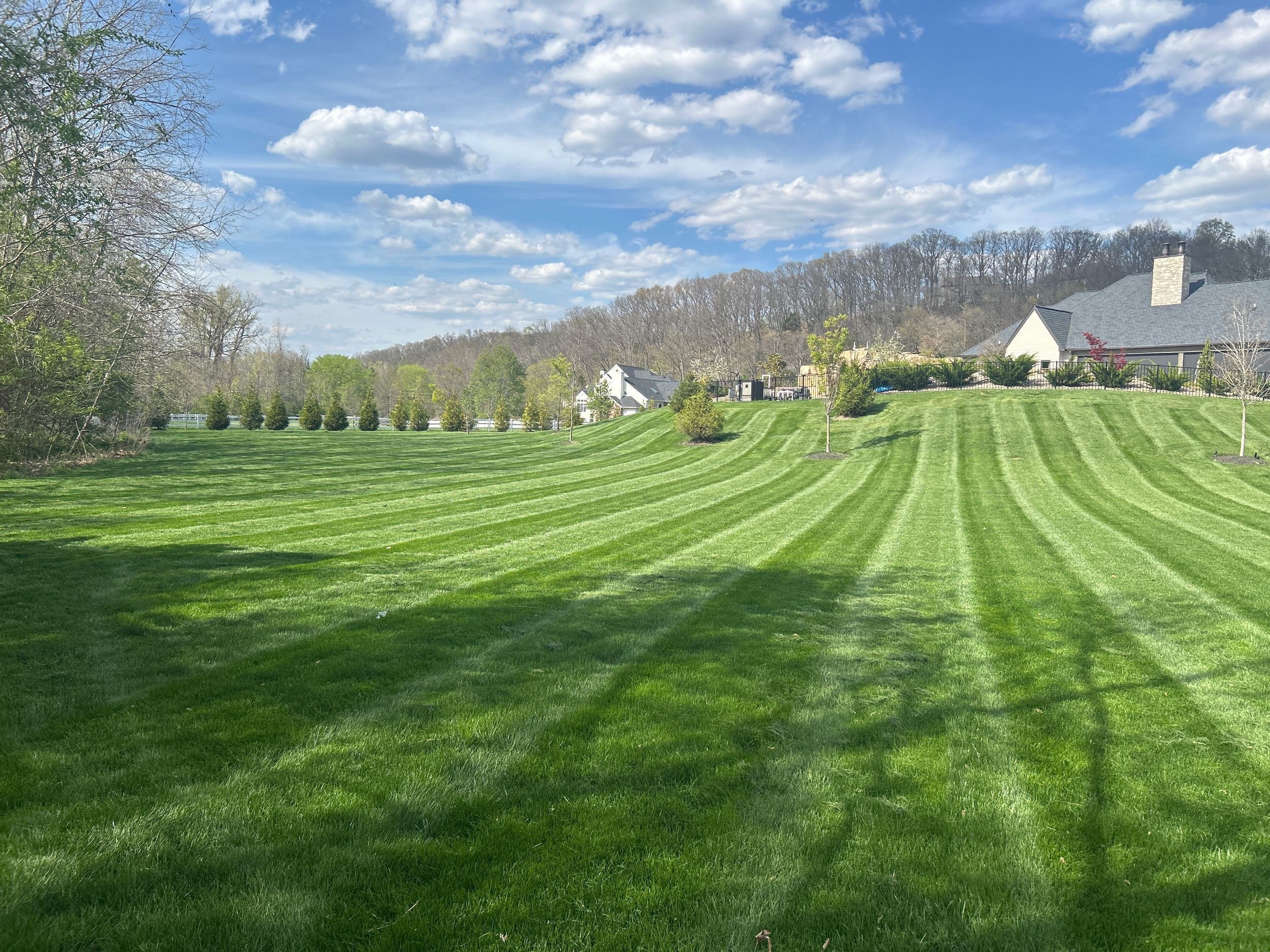
Why Height Matters More Than Frequency
Research consistently shows that taller grass grows deeper roots.
A Fescue lawn at 3.5 inches develops roots that go significantly deeper than the same grass mowed at 2 inches. Since deeper roots reach more water and nutrients, the taller plant will have better drought tolerance. Critical in a St. Louis July!
Taller grass kills weeds naturally. A thick canopy at 3.5 to 4 inches blocks sunlight from hitting the soil. Most weed seeds never germinate. MU research shows this can provide up to 80 percent weed control without any herbicide at all.
Cutting too short starts a cycle where you stress the grass, thin the canopy, heat up the soil, and invite weeds. Now your weakened turf has to compete with weeds and your lawn thins more and more. A single aggressive scalping in spring can take until fall over-seeding to fix.
Spring Through Fall: What Your Lawn Actually Needs
Your lawn grows differently every season. Here's what that means for how you mow.
Early Spring (March–April)
Grass starts growing when soil temps stay above 50°F, which in St. Louis is usually mid to late March. Begin mowing when the grass reaches cutting height. Once every seven to ten days is usually enough during this ramp-up.
Late Spring (May–Early June)
This is peak growth season. Soil is warm and moisture is abundant, so your lawn is growing quickly. You may need to mow every five to six days to stay within the one-third rule. This is where most people fall behind and scalp the lawn trying to catch up. Scalping exposes soil. Crabgrass loves exposed soil.
Summer (Late June–August)
Growth slows way down, especially in July and August when temps hit 90°F regularly. Cool-season grass goes semi-dormant when it's hot. Raise your mowing height to the top of the recommended range, about 3.5 to 4 inches. Mow every ten to fourteen days, or only when grass hits the one-third threshold. Don't force-mow a dormant lawn just to keep a schedule. You'll damage stressed turf for no reason.
Fall (September–October)
Fall is the most important growth period of the year. During the cooler months, grass gets a second growth surge, filling in bare spots, and regrowing roots. This is when we get the most benefit from over-seeding. By continuing to follow the one-third rule, you'll allow your turf to mature.
Late Fall (November)
Lower the mowing height gradually on your last two or three cuts. Bring it down to about 2.5 inches before dormancy. This reduces snow mold risk, keeps rodents from nesting in tall grass, and gives you a clean spring green-up. Stop mowing once air temps stay below 50°F to 55°F, which in St. Louis is usually late November.
What Professional Mowing Service Does For You
Life happens. All it takes is a busy weekend and suddenly the grass is six inches tall!
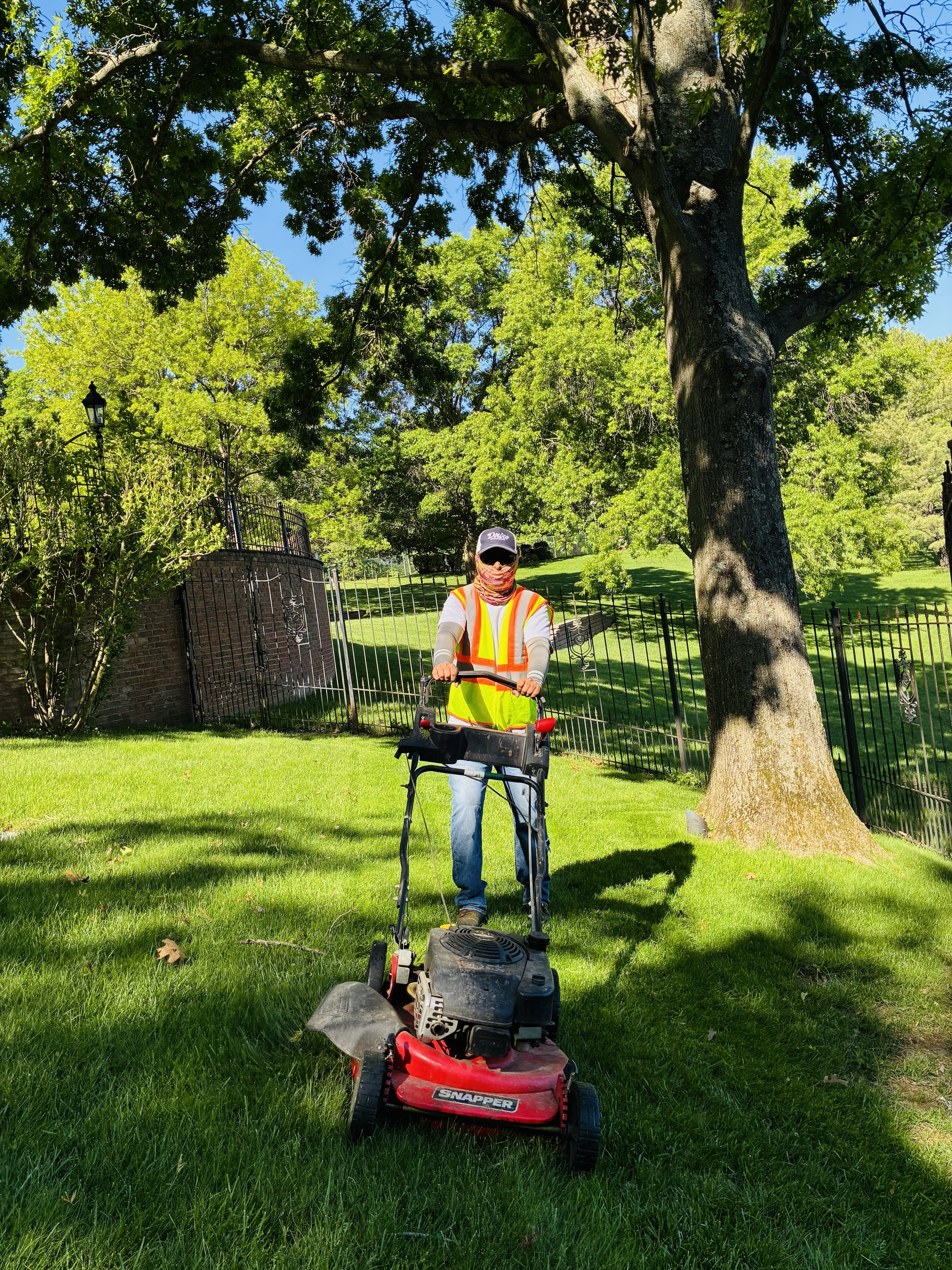
First and foremost, professional mowing services take care of the consistency problem. At Dowco, we adjust frequency and height based on actual growth, not an arbitrary calendar. When growth accelerates in May, we're there. When the lawn goes semi-dormant in August, we avoid mowing stressed turf for the sake of a schedule.
We take care of all the little details that matter, like sharpening our commercial-grade mower blades daily since dull blades shred the plant and invite disease. We alternate cutting directions to prevent soil compaction.
FAQ
When do I start mowing in spring?
When the grass reaches cutting height. In St. Louis, that's usually mid to late March when soil temps stay above 50°F. Don't go by the calendar. Go by growth.
When do I stop in fall?
When air temps stay below 50°F to 55°F, which is usually late November in St. Louis County. Lower the height gradually on your last few cuts to about 2.5 inches before dormancy.
Should I bag clippings or leave them?
Leave them if they're short enough to reach the soil. Clippings contain 3 to 4 percent nitrogen. Free fertilizer! Only bag clippings if they clump on the surface or if your turf already has thatch issues.
What happens if I mow too short?
When you mow too short, the tissue that feeds the plant gets removed. This leads to shallow roots, and when the turf thins out, weeds like crabgrass start to fill in the gaps. An aggressive scalping could mean you're waiting until fall to fix with an over-seeding.
Should I mow wet grass?
No. Wet grass tears instead of cutting cleanly. That leaves ragged tips that brown and invite disease. Plus, the wet clippings clump and smother turf. If rain delays you, raise the height on the next mow instead of removing too much at once.
Is it bad to mow in the heat?
Mowing above 90°F stresses already-stressed turf. Open wounds lose moisture faster in extreme heat. So, early morning (after dew dries), or late afternoon is safer for both you and the lawn.
Looking for professional mowing in Chesterfield or St. Louis County?
Dowco provides full-service lawn mowing and landscape care throughout the area. We handle the consistency piece so you don't have to think about it.
Click here or call (636) 532-9192 for a free estimate.